A buyer comparing Hobe Sound and Jupiter usually starts with one number: the gap between what a house costs in each town. Over the three months ending in May 2026, Hobe Sound homes sold for a median of $489,000. Jupiter homes sold for a median of $670,000. That's a $181,000 difference, and it's tempting to read it as a straightforward discount for staying a few miles south of the Loxahatchee River.
It isn't. The gap is real, but it's measuring two different things pretending to be one thing. Once you split each town's inventory by what's actually for sale, that discount mostly disappears for the exact kind of home a move-up buyer is shopping for.
The Math That Looks Simple Until You Check the Square Footage
Start with the raw numbers: the first three metrics use the same three-month window, while homes sold is the May 2026 total:
| Metric | Hobe Sound | Jupiter |
|---|---|---|
| Median sale price | $489,000 | $670,000 |
| Median price per square foot | $318 | $428 |
| Median days on market | 101 | 65 |
| Homes sold (May 2026) | 64 | 417 |
The price gap and the per-square-foot gap track almost exactly: Jupiter runs about 37 percent higher on median price and about 35 percent higher on price per square foot. That consistency is worth sitting with for a second. If Jupiter homes were simply bigger, you'd expect the per-square-foot number to close the distance between the two towns. It doesn't. Buyers in Jupiter are paying more for the same square footage, not more square footage for the same rate.
So the question isn't whether Jupiter costs more. It's why, and whether that premium applies evenly across everything in Hobe Sound or just to some of it.
Where Hobe Sound's Median Actually Comes From
Hobe Sound's housing stock is older and more varied than most buyers expect walking in. A large share of the town's homes were built between 1970 and 1999, and manufactured homes and trailers make up roughly 28 percent of the town's housing units. That's not a knock on the town. It's a description of what's sitting in the sales data that produces a $489,000 median.
A buyer who's fine with a smaller footprint, an older roof, or a manufactured home in a no-HOA community like Ridgeway genuinely does save money here, and the savings are real. But that buyer is not the same person cross-shopping Hobe Sound against Jupiter's newer waterfront stock. The townwide median blends both groups into one number, which is exactly why it's a poor tool for comparing what a move-up buyer would actually consider buying in either place.
The New Construction Test
Here's where the correction shows up in the data. New construction in Hobe Sound is scarce. As of late August 2026, there were only 26 new homes for sale in the town, carrying a median listing price of $792,000. That's not a typo relative to the resale median of $489,000. It's higher than Jupiter's overall median sale price of $670,000.
The Landings at Hobe Sound Village, a 16-unit townhouse development near the gateway to Jupiter Island, was on track to deliver its first residences this spring, and it's the kind of project that explains the scarcity. When there are only a couple dozen new-build options in a town, and land near the Intracoastal or Bridge Road corridor is largely built out, the few new homes that do come to market price closer to what a comparable new build in Jupiter would cost, not closer to the town's own resale median.
This is the piece that changes the comparison. If you're the kind of buyer who wants a newer home, updated systems, and a floor plan built for how people live now, the $181,000 gap between the two towns shrinks toward something much smaller, because you're no longer shopping in the segment that produces Hobe Sound's low median in the first place.
Why Jupiter's Floor Doesn't Move
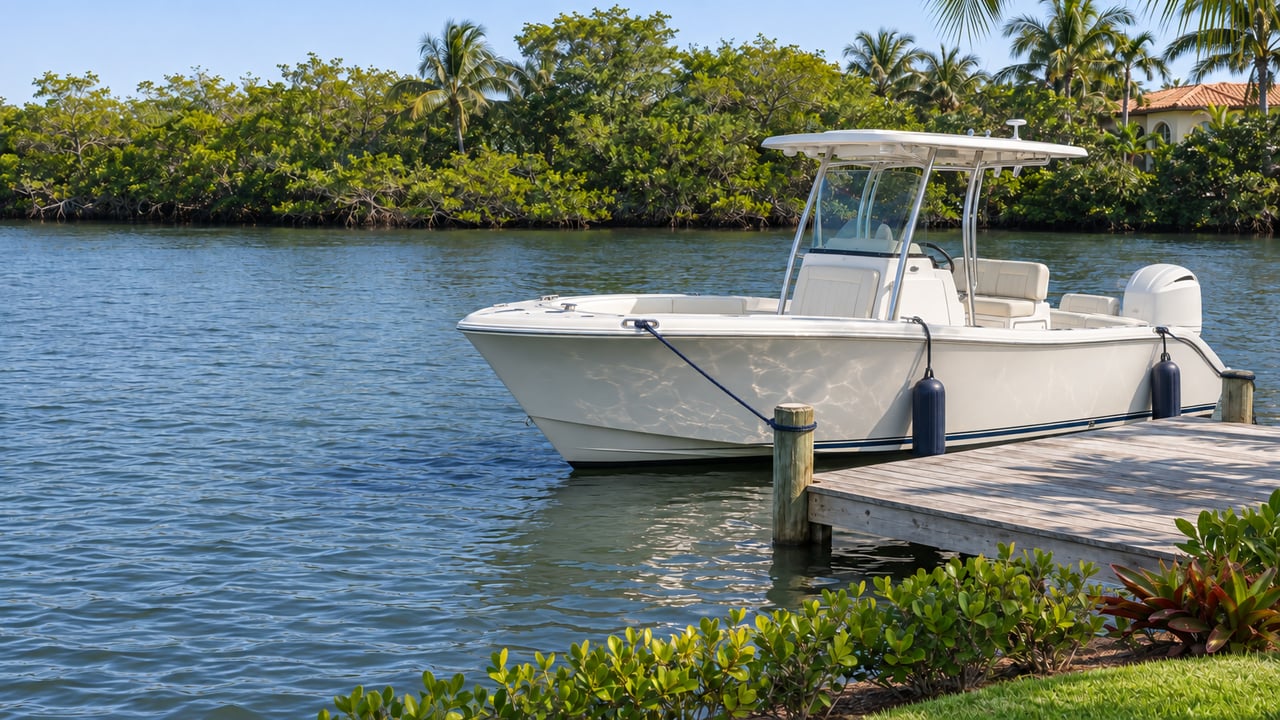
Jupiter's price floor holds for a different reason: there's very little new waterfront land left to build on. The Loxahatchee River, which threads through Jupiter and neighboring Tequesta with navigable access out through the Jupiter Inlet, has a fixed number of parcels with deep-water dockage. Communities like Pennock Point and Riverside on Loxahatchee aren't adding inventory, they're recirculating it, and buyers who want that specific combination of privacy, dock access, and proximity to the inlet keep showing up regardless of where broader rates sit.
The scale of that premium isn't unique to Jupiter, either. In nearby Tequesta, waterfront properties were commanding premiums of 40 to 60 percent over comparable inland homes as of the second quarter of 2026. That's the general shape of water-access scarcity in this corridor, and it's a useful reference point for understanding why Jupiter's median doesn't soften even when the broader market cools.
The Days-on-Market Flip
Here's the detail that should stop a buyer mid-scroll. Hobe Sound homes are taking longer to sell than they were a year ago, up to 101 days from 70. Jupiter homes are selling faster, down to 65 days from 80. The cheaper town is now the slower-moving one.
That's backwards from what most buyers assume, and the inventory mix explains it. A lot of what's sitting on the market in Hobe Sound right now is the older, non-differentiated stock that makes up the bulk of the town's listings. It's competing against itself, and buyers shopping that price point have plenty of similar options to compare, which stretches decision time. Meanwhile the scarce, new, or waterfront-adjacent product in both towns keeps moving quickly because there simply isn't enough of it to create that same competition among sellers.
What This Means If You're Comparing the Two Towns
If you're deciding between Hobe Sound and Jupiter, the median price alone won't tell you what you need to know. What will:
- Are you shopping resale housing built before 2000, or new construction? The savings in Hobe Sound apply almost entirely to the former.
- Do you need direct water access with dock capacity for a larger vessel? That's the category where Jupiter's scarcity premium is most durable and least likely to soften.
- How much does timeline flexibility matter? A longer average days-on-market in Hobe Sound can work in a buyer's favor on price negotiation, but it also means more patience if you're selling there.
- Are you comparing listings within the same product type across both towns, or comparing a Hobe Sound resale to a Jupiter waterfront estate and calling the difference a "location premium"? Those are two different questions with two different answers.
Quick questions worth asking before you commit to either town:
Is Hobe Sound actually cheaper for new construction? Not for buyers seeking a new home. The scarcity of new builds pushes Hobe Sound's new-home median above Jupiter's overall resale median.
Does Jupiter's price premium apply to every property type? No. It's concentrated in waterfront and river-adjacent inventory. Inland Jupiter product competes more directly with Hobe Sound's newer stock.
Why are Hobe Sound homes taking longer to sell if they're cheaper? Because the bulk of current inventory is older housing competing against similar older housing, not because the location itself is less in demand.
The honest version of this comparison isn't "Hobe Sound is the value play and Jupiter is the splurge." It's that both towns have a scarce, fast-moving segment and a larger, slower-moving one, and knowing which segment you're actually shopping changes what the price gap means for your decision.
If you're weighing a move between Hobe Sound and Jupiter and want a read on what a specific property or price point actually gets you in either market, Julie Cline has spent two decades tracking these towns block by block. Start with a free home valuation to see where your current equity stands, then let's talk through which market actually fits what you're trying to buy.