Pricing your Stuart home can feel tricky right now. You want to aim high enough to protect your equity, but not so high that buyers scroll past your listing or wait for a price cut. The good news is that smart pricing is not guesswork. With the right local data and a clear look at your home’s condition, competition, and features, you can set a price that attracts serious buyers and supports a stronger outcome. Let’s dive in.
Stuart pricing starts local
Stuart is not a one-price market. In March 2026, Redfin reported a citywide median sale price of $302,500, about 67 days to sell, a 96.0% sale-to-list ratio, and price cuts on 28.6% of homes. That tells you buyers are active, but they are also paying attention and passing on homes that miss the mark.
Broad averages only tell part of the story. Realtor.com showed a median listing price around $430,000 and roughly 1,100 homes for sale, but neighborhood pricing varied widely. Reported median list prices ranged from about $178,000 in East Riverside to about $599,995 in Mariner Sands Country Club, with the Port Salerno Waterfront District around $349,000.
That kind of spread matters. If you price your home based on a citywide headline instead of your micro-market, you can easily come in too high or too low. In Stuart, the most useful comparisons are usually the homes most like yours in the closest nearby area.
What today’s market says
Martin County single-family data gives helpful context for Stuart sellers. In March 2026, the median sale price was $606,250, with 777 active listings and 4.4 months of supply. Florida Realtors notes that 5.5 months is considered balanced, so the county was still below that level, but not by much.
That means sellers still have opportunity, but buyers have options. The same report showed a median time to contract of 58 days, a median time to sale of 99 days, and sellers receiving a median of 93.8% of original list price. In plain terms, homes are selling, but overpricing can cost you time and negotiating power.
A realistic list price matters more in a market like this. Buyers are not chasing every home. They are comparing condition, location, features, and monthly costs before making an offer.
How a strong list price is built
A good list price is usually built from a comparative market analysis, often called a CMA. According to the National Association of Realtors consumer guide, agents look at your home’s size, location, amenities, and condition, then compare it with recently sold, under-contract, and active similar homes.
That process matters because sold homes show what buyers have actually paid. Pending homes can signal where current demand is landing. Active listings show what your home will compete against the moment it hits the market.
Your timeline also matters. If you want to move quickly, your price may need to be more competitive from day one. If you have more flexibility, you may choose to test the higher end of a supported range, but it still needs to line up with the market.
Why neighborhood comps matter most
Martin County’s Property Appraiser uses comparable sales in the neighborhood as part of estimating market value, with adjustments for living area, construction quality, and year built. That logic mirrors how smart real-world pricing works. The closer the comparable homes are to yours in location, style, age, and condition, the more useful they are.
This is especially important in Stuart because property types vary so much. A condo near downtown, a ranch home inland, and a waterfront property with dock access do not compete in the same way. Even if they share a ZIP code, buyers may view them as completely different products.
The best pricing strategy usually starts with the nearest recent sold comps, then pressure-tests that number against active competition and how buyers are behaving right now. That helps you avoid relying too heavily on countywide medians, tax records, or broad online estimates.
Features that can change your price
Not all square footage is valued the same way. Some features can push your Stuart home into a stronger price range, especially in a coastal market where outdoor living and boating access shape buyer demand.
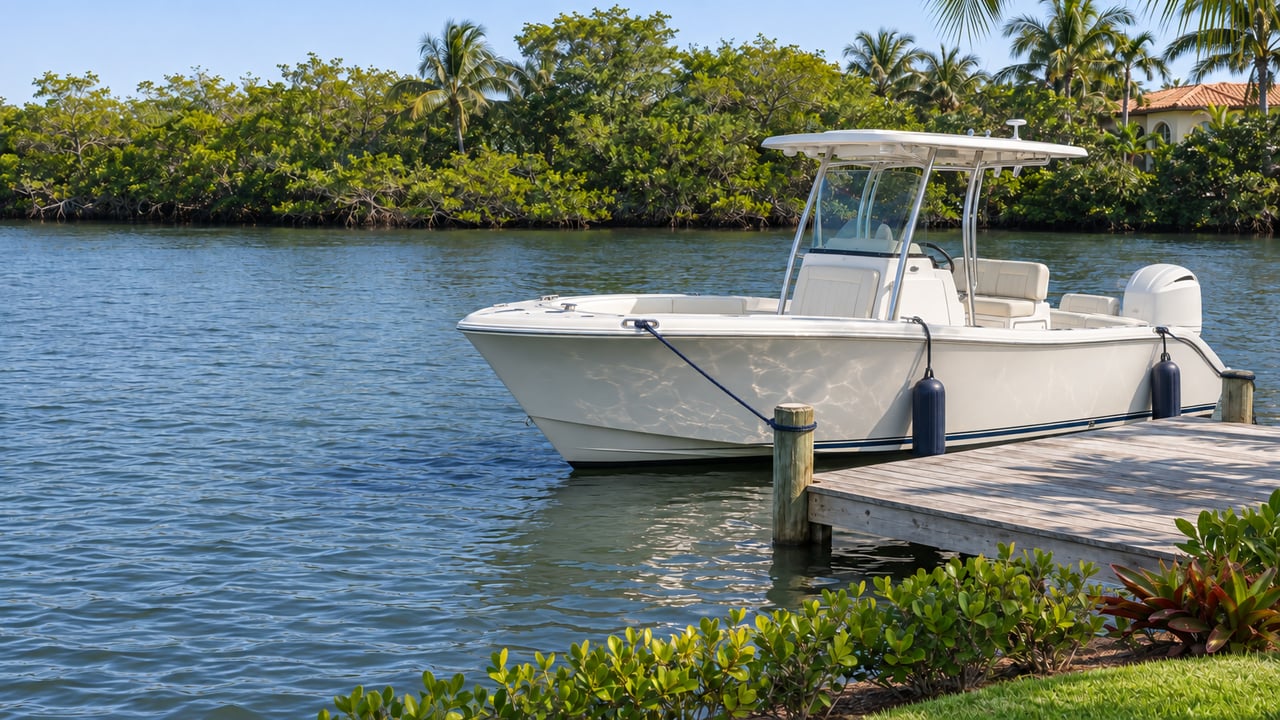
National Zillow research found that homes mentioning a dock sold for 5.4% more than expected, outdoor kitchens for 4.4% more, outdoor showers for 4.3% more, outdoor fireplaces for 2.8% more, and waterfront homes for 3% more. The same research found that turnkey homes sold for 2.9% more than expected, remodeled homes for 2.2% more, and fixer-uppers sold for 14% less.
These are national benchmarks, not Stuart-specific rules, but they support something local sellers already feel in the market. Presentation, outdoor living, and move-in-ready condition can meaningfully affect how buyers respond. If your home has a dock, polished outdoor spaces, or quality updates, those details should be reflected in your pricing and marketing plan.
Flood zones can affect buyer math
In Stuart and Martin County, flood status can also shape price. Martin County explains that Flood Insurance Rate Maps help determine flood insurance premium rates and some building code requirements. The county also notes that homes in Special Flood Hazard Areas require flood insurance for federally backed mortgages.
That does not mean a home in a flood zone cannot sell well. It means buyers may be calculating costs differently. Two homes with similar layouts and locations may not land at the same value if one brings different insurance or lending considerations.
This is one reason pricing should go beyond photos and square footage. A thoughtful price accounts for the full ownership picture a buyer is considering.
What online estimates get wrong
Online valuation tools can be useful as a starting point, but they are not pricing strategies. Zillow says its Zestimate is not an appraisal, and Redfin says its estimate is not a replacement for expert pricing advice. Redfin also reports a median error rate of 1.95% for on-market homes and 7.51% for off-market homes.
That gap can be meaningful when you are making a major financial decision. Public data and algorithms may not fully capture renovation quality, dock access, waterfront orientation, flood-zone impact, or how well your home shows in person. Those details often influence buyers more than a computer model can measure.
You can still use these tools to get oriented. Just treat them as rough ranges, not final answers. For a true pricing plan, you need a local, in-person view of your home and its closest competition.
What you can research yourself
If you are preparing to sell, you can do some helpful homework before setting a price. The Martin County Property Appraiser site allows searches by parcel ID, account number, subdivision, address, or owner name, and it provides access to property and sales data.
It is also important to understand what you are looking at. The Property Appraiser explains that market value, assessed value, and taxable value are different. Assessed and taxable values may reflect caps or exemptions, so they should not be treated as your likely list price.
Your own research can give you direction, but it works best when paired with a neighborhood-specific CMA. That combination helps you see both the public record and the real market story.
Pricing mistakes to avoid in Stuart
A few common mistakes can make your home sit longer than it should:
- Using a citywide average instead of neighborhood comps
- Pricing based on what you want to net rather than what buyers will support
- Ignoring active competition in your immediate area
- Overvaluing dated finishes or deferred maintenance
- Relying too heavily on an automated estimate
- Starting high with plans to reduce later, even when price-cut activity is already visible in the market
In Stuart’s current market, price cuts are not rare. Redfin reported that 28.6% of homes had price drops. That is a sign that many sellers are still testing the market too aggressively.
Why presentation and pricing work together
Price does not stand alone. Buyers judge your home through the lens of both value and presentation. A well-prepared home often supports stronger interest because buyers can more easily picture themselves living there and feel more confident about the condition.
That is why pricing works best when paired with strong listing preparation. Professional photography, virtual tours, thoughtful staging, and renovation guidance can help your home compete more effectively in a market where buyers are selective. When your home looks polished and your price feels credible, you create a stronger first impression from the start.
A smart Stuart pricing strategy
If you want the short version, this is the most defensible path for pricing your Stuart home today:
- Start with the closest recent sold comps in your micro-neighborhood.
- Adjust for property type, size, age, condition, and key features.
- Compare your price against active and under-contract competition.
- Factor in waterfront or dock value, outdoor living, and renovation quality.
- Consider flood-zone implications that may affect buyer costs.
- Match the price to your timeline and selling goals.
That approach reflects what the local data is showing right now. Homes are still selling, but the market is not rewarding broad overpricing. A strategic list price gives you the best chance to attract attention early, reduce time on market, and protect your negotiating position.
If you are thinking about selling in Stuart, the right price is rarely about chasing the highest number on paper. It is about positioning your home so buyers see the value clearly and act with confidence.
For a pricing strategy built around your neighborhood, your property’s features, and today’s buyer behavior, connect with Julie Cline for a personalized plan.
FAQs
How should I price my Stuart home in today’s market?
- Start with recent sold homes that closely match your property in your immediate area, then adjust for condition, features, and current competition.
Are Stuart home prices the same across every neighborhood?
- No. Local data shows wide pricing differences across Stuart, so neighborhood and property type matter more than a single citywide average.
Do waterfront or dock features raise a Stuart home’s value?
- They can. National research suggests features like docks, waterfront location, and outdoor living amenities may support higher sale prices, especially when the home is well presented.
Can a flood zone affect my Stuart home price?
- Yes. Flood-zone status can influence insurance costs, lender requirements, and buyer demand, which may affect how your home should be priced.
Should I trust a Zestimate or Redfin Estimate for my Stuart home?
- Use online estimates as a starting point only. They are not appraisals and may miss important local factors like condition, upgrades, dock access, and flood-related costs.
What is the difference between market value and taxable value in Martin County?
- Market value reflects an estimate of current property value, while assessed and taxable values may be affected by caps or exemptions and should not be used as your list price.
Why do some Stuart homes need price cuts?
- Current market data shows buyers are selective. Homes that start too high compared with recent comps and active competition may need reductions to regain attention.